Read & study
The source library.
Explore early cities, languages, religion, Kabbalah, alchemy, philosophy, human origins, and disputed history. Open a guide, follow its sources, and keep the next question in view.
This collection contains published introductions to the growing knowledge base. Each guide links its sources; traditions and open hypotheses retain their context.
10 of 96 source guides
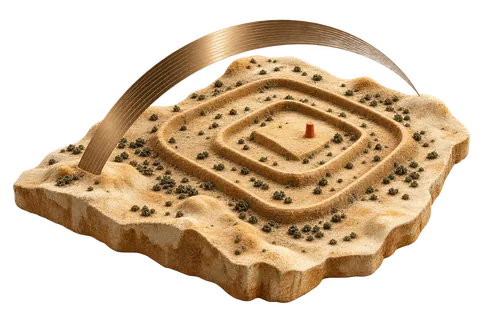
The Amazon's hidden earthworks: 432 observed, thousands modeled
A new lidar survey changes the scale of the question. Here is what researchers saw, what they estimated, and why the difference matters.
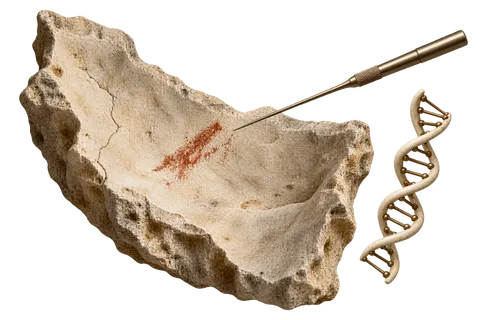
Ancient DNA on a cave wall is not an artist's signature
Researchers recovered ancient human DNA near rock art in Iberian caves. The preservation is real; attribution to an artist remains unproven.
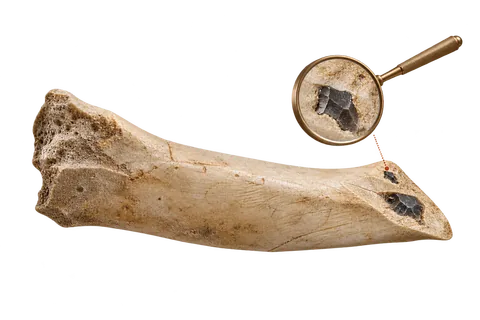
A 480,000-year-old tool and the evidence in its surface
An elephant-bone fragment from Boxgrove carries microscopic traces of use. The claim is about a specific material and task, not a named maker.
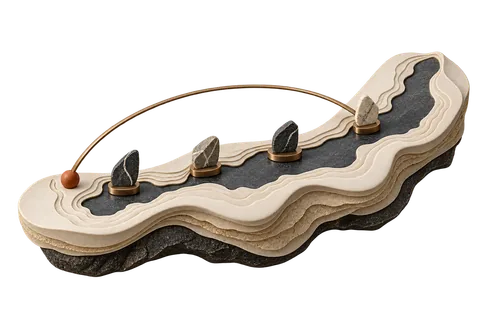
Plague before farming cities: the Lake Baikal evidence
Ancient pathogen DNA and kinship analysis identify two outbreak phases among hunter-gatherer burials. The sample cannot measure an entire region's mortality.
Did gut microbes travel with us? A genomic model of deep migration
A new comparison of living Tsimane and Hadza communities traces long microbial lineages. The ancient journey is inferred, not observed directly.
One decree. Three scripts. A way back into a language.
Begin with the Rosetta Stone: see how comparison turns an inscription into a research question you can follow.
Meroitic: a script we can sound out but not fully read.
The Meroitic script of Kush has known sign values and an unresolved language. Learn the difference between reading signs, reconstructing grammar, and translating a text.
Indus inscriptions: a function before a reading.
The Indus script remains undeciphered. See how a 2023 study argues for what the short inscriptions were used for, and why that is a different question from what they say.
The Rig Veda: dating a tradition that was spoken first.
The Rig Veda was composed orally and copied much later. Learn to keep four different dates apart: sacred chronology, estimated composition, oral transmission, and surviving manuscripts.
Proto-Indo-European: reconstructing a language nobody wrote.
Thousands of years before writing reached Europe, a language ancestral to Sanskrit, Latin, and English was spoken. Learn what a reconstruction is and what it is not.
From Proto-Slavic to Russian: a continuum, not a birthday.
Follow the Slavic branch from its Balto-Slavic ancestor through Old Church Slavonic and Old East Slavic to modern Russian, and see why the record refuses single-date origins.
How far back can language comparison reach?
Nostratic, Borean, and Proto-World propose ancestors far deeper than Indo-European. Learn why the research record stores them as hypotheses with falling confidence rather than as ancestry.
English and German: two daughters of West Germanic.
English and German descend from a shared western branch of Germanic. Follow the family tree in the research record, and see why its stages are conventions rather than birthdays.
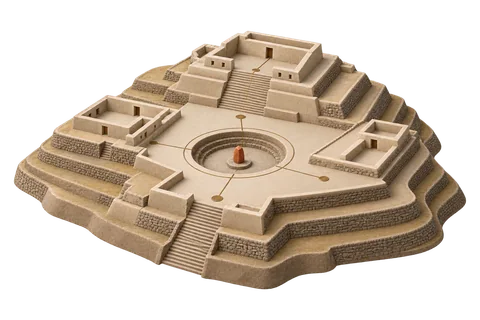
Serra da Capivara: rock art and the oldest-dates debate.
A Brazilian park holds hundreds of rock-art sites and a claim of occupation far older than the regional consensus. See how the research seed keeps that claim open rather than accepted.
Chinchorro: the oldest artificial mummies.
Marine hunter-gatherers on the Atacama coast practised artificial mummification millennia before Egypt. Learn to read a long cultural range as a container, not an event.
Caral: a wider map of early urban life.
Visit an early urban center in Peru and learn why a shared timeline helps us compare societies without assuming a connection.
Göbekli Tepe: monuments raised before farming towns.
Visit a hilltop in southeastern Türkiye where carved stone enclosures stand at the edge of the Neolithic, and learn how a site's dates are framed.
Ubaid: the villages before the first cities.
Meet the Ubaid period of Mesopotamia and see why one research record keeps two different date ranges side by side instead of averaging them.
Uruk: reading the first urban horizon.
Follow the Uruk period in southern Mesopotamia, where monumental architecture, administration, and early writing appear, and learn to read a period's dates as approximate.
The Indus cities: an era of integration.
Explore the Mature Harappan phase of the Indus civilization and see how archaeologists build a chronology from artifact sequences and radiocarbon dates rather than royal names.
Mehrgarh: when a date moves by two thousand years.
Watch a chronology dispute in progress: older literature placed Mehrgarh's Neolithic in the eighth millennium BCE, and direct radiocarbon dates published in 2025 propose a much later start.
Gonur Depe and the Oxus civilization: a Bronze Age world with two clocks.
Enter the Oxus civilization of Central Asia through its largest site and learn why two published chronologies are kept as separate candidates.
Kerma: an independent state on the Middle Nile.
Meet Kerma, the early Kushite center south of Egypt, and see which kinds of evidence let archaeologists describe it as an independent urban state.
Çatalhöyük: a town without streets.
Visit two mounds on the Konya plain where densely packed houses were entered from the roof, and learn to keep each claim with its mound and level.
Jericho: eleven thousand years in one mound.
Tell es-Sultan preserves twenty-nine phases of occupation beside a spring. Learn why a site's oldest date must not be borrowed for its youngest walls.
From Naqada to the first dynasties.
Trace the thousand years in which Upper Egyptian communities became the Early Dynastic state, and compare a relative chronology with new radiocarbon dates.
Early Dynastic Sumer: how a period gets its subdivisions.
Use the Square Temple at Tell Asmar to see how the Early Dynastic period of Mesopotamia was constructed by archaeologists, and why its subdivisions are debated.
The pyramids of Sudan: counting what survives.
Sudan's royal cemeteries hold more pyramidal monuments than Egypt, but every total depends on a counting rule. Learn to read a number together with its definition.
Napata: the kingdom that ruled Egypt from the south.
Follow Napatan Kush from its sacred mountain at Gebel Barkal to the 25th Dynasty, when kings from Kush ruled Egypt and revived older pharaonic forms.
Baalbek: earlier remains and a Roman podium.
Baalbek's enormous podium stones attract bold claims. Learn how the research record separates attested earlier remains from the date of the monumental construction itself.
Star forts: what the construction records say.
Bastioned fortresses look alike from the air, which invites sweeping claims. Read five documented construction histories and see how different their dates and builders are.
Chavín: a ceremonial centre before the Andean states.
Chavín de Huántar gave its name to a style found across the Andes. Learn why the site's building sequence and the cultural horizon need separate dates.
The Nasca lines: a date range is not a function.
The geoglyphs of Nasca and Palpa are dated to a thousand-year span. Learn why that range cannot by itself tell you what any one figure was made to do.
Tiwanaku: a capital on the altiplano.
Follow Tiwanaku from urban florescence to decline, and learn why the record refuses to date every monument by the city's best-known centuries.
St Petersburg, 1703: a city with a documented start.
Claims of a buried older city under St Petersburg circulate widely. Read three institutional records: the urban project of 1703, the Swedish fortress that preceded it, and a fortress built in phases.
Plimpton 322: a Babylonian table and its interpreters.
Meet a clay tablet from around 1800 BCE whose columns of numbers have been read in several ways. Separate the object from the interpretations.
The Rhind Papyrus: a scribe's handbook of problems.
Open the British Museum's record for the Rhind Mathematical Papyrus, a collection of 84 worked problems, and learn why an object's date and its text's origin are different questions.
Writings on Reckoning: an excavated text beside a transmitted classic.
Compare the Suan shu shu, a mathematical manuscript on bamboo strips from a Han tomb, with the transmitted Nine Chapters, and learn how excavated witnesses test a textual tradition.
K.2069: a reciprocal table from the library at Nineveh.
A seventh-century tablet from Nineveh lists reciprocals for sexagesimal arithmetic. Learn why the date of an artifact is not the date of the mathematics on it.
Archimedes: what survives of his works.
The treatises of Archimedes reach us through manuscripts made a thousand years after his death. Learn to keep an author's lifetime, a text's composition, and a copy's date apart.
YBC 7289: the square root of two on a school tablet.
A small round clay tablet from the Old Babylonian period shows a square with its diagonals and a number close to the square root of two. Read the numbers as a scribe would.
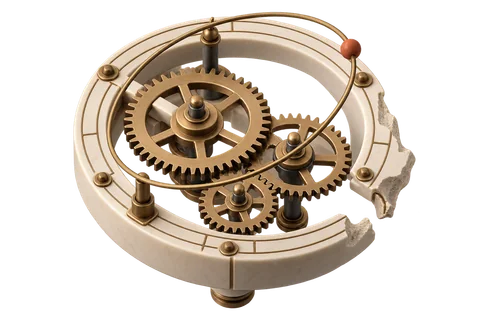
MUL.APIN: a Babylonian compendium of the sky.
Read the British Museum's record for the first tablet of MUL.APIN, a Late Babylonian astronomical treatise, and see how a copy's date differs from a tradition's age.
Astronomical Diaries: a dated record of the Babylonian sky.
Enter the Babylonian Astronomical Diaries through a single tablet, BM 32312, and learn why a dated observation is kept apart from what it was taken to mean.
Mercury models: how close is close?
Copernicus's mature Mercury model closely matches Ibn al-Shatir's. See which parts of that correspondence the research case grades as strong, and which common arguments it calls insufficient.
The Āryabhaṭīya: dating a work and its witnesses.
The Āryabhaṭīya is traditionally dated to 499 CE. See how its critical edition lets the research record keep the composition, the author, and each surviving manuscript as separate objects.
Papyrus Ebers: a medical scroll from the end of the 16th century BCE.
Open a scholarly digital edition of the Papyrus Ebers, one of the longest Egyptian medical texts, and learn to read remedies, incantations, and cosmology as separate layers.
Ancient medicine in Byzantine hands: the Hippocratic corpus and the Vienna Dioscorides.
Two studies of Greek medical texts show the gap between when a work was composed and when its surviving manuscript was made. Learn to date the witness and the work separately.
Papyrus Berlin 3027: spells and remedies for mother and child.
An 18th Dynasty papyrus collects incantations and recipes for mothers and children. Use it to test the line between medicine and ritual that modern categories draw.
Antikythera: how much can a fragment reveal?
Follow the evidence behind an ancient astronomical mechanism and distinguish surviving material from a proposed reconstruction.
Two astrolabes: reading an instrument through its museum record.
Compare two thirteenth-century astrolabes, one in London and one in New York, and see how a museum record, a dated inscription, and a surviving treatise support different kinds of claims.
Leiden Papyrus X and the Stockholm Papyrus: recipes for metals, dyes, and stones.
Two Greek papyri from late Roman Egypt collect technical recipes for working metals, dyeing, and imitating gems. Learn how scholars read them and why their relationship is treated with caution.
Zosimos, Stephanos, and Pseudo-Democritus: alchemy with names attached.
Three Greek alchemical texts carry three kinds of author problem: a known writer, a disputed one, and a borrowed name. Learn how each changes what a shared recipe can prove.
The Almagest: one book, four cities, a thousand years.
Follow Ptolemy's astronomical treatise from second-century Alexandria through Arabic translation in Baghdad and Latin translation in Toledo to a dated copy made in Saragossa in 1381.
Hunayn ibn Ishaq: translating Galen into Syriac, Arabic, and beyond.
The ninth-century translator Hunayn ibn Ishaq rendered Galen into Syriac and Arabic for different patrons. Learn why those were separate commissions, and how an Arabic version can preserve what Greek lost.
From Maragha to Copernicus: tracing a transmission claim.
Copernicus's planetary models resemble those of Ibn al-Shatir of Damascus. Follow a research case that grades each link in the chain, from verified fact to unsupported story.
The Corpus Hermeticum: dating a collection that claims to be older.
The Hermetic treatises present themselves as the wisdom of an Egyptian sage. Learn why the record dates each treatise separately and never projects the corpus into pharaonic prehistory.
Euclid in Latin: a fifteenth-century witness.
A Paris manuscript carries a Latin Euclid made from Arabic. Learn why the record dates the copy, declines to name the translator, and keeps Euclid's own date far away from both.
Bianchini's tables in Copernicus's own hand.
A copy of planetary-latitude tables circulated by Giovanni Bianchini survives in Copernicus's handwriting. Follow what that artifact establishes, what it only suggests, and what the almanacs argue against.
The Tusi couple in Greek: the Schemata of the Stars.
A Greek astronomical text carries a Persian lunar model and, with it, the same numerical error. Learn why a shared error is a stronger fingerprint than a shared diagram.
Three routes into Renaissance Italy.
A cardinal's library, a travelling scholar, and a Mantuan notebook each brought part of late Islamicate astronomy to Italy. See why the research case calls them partial carriers and names two gaps still open.
Ibn al-Shatir's Nihayat: which manuscript counts?
A fourteenth-century Damascus astronomer left a planetary theory that survives in several manuscripts. Learn why a manuscript on his astrolabe is not evidence for his Mercury model.
Tartary on the map: what a label can and cannot tell you.
Three maps in the Library of Congress carry the label Tartary across northern Asia. Learn how a research record transcribes a map label without turning it into evidence of a political empire.
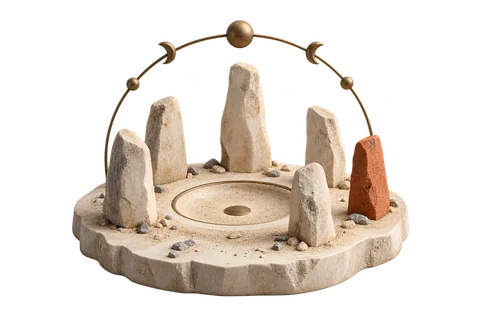
Nabta Playa: a ritual landscape and a missing link.
An archaeological setting for ritual and the sky, with an open question about later Nile Valley traditions.
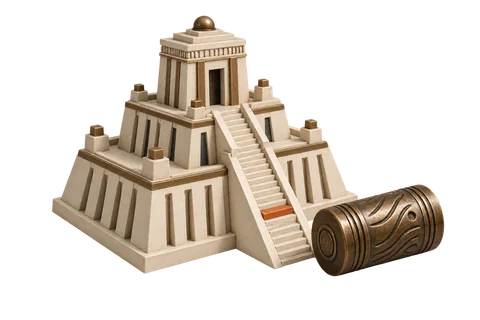
Mesopotamian religion: context before a family tree.
Use places, periods, and objects to approach religious traditions without turning similarities into ancestry.
Zoroaster and the problem of several clocks.
Separate a traditional founder, a textual layer, later witnesses, and the religion’s subsequent history.
Persian–Jewish contact: how to test an influence.
Historical contact provides a setting for comparison; specific theological connections need their own evidence.
The Pentateuch in an imperial setting.
Explore competing models for the formation of a textual collection and the historical contexts used to study it.
Early Buddhism among competing ideas.
Read the Buddha in the intellectual setting of early Indian debates about suffering, action, and liberation.
Sefer Yetzirah: which text are we reading?
A critical edition opens a small but complex work through its manuscript recensions and variant readings.
The Bahir: a translation is a starting point.
Approach a foundational mystical text while keeping translation, Hebrew edition, and manuscript evidence distinct.
The Zohar: a corpus with many layers.
A scholarly translation project and a manuscript-history lead offer different ways into Zoharic literature.
Hekhalot literature: a text family in parallel.
Use a manuscript synopsis to explore ascent traditions without collapsing them into one book.
Lurianic Kabbalah: person, practice, community.
A study of Isaac Luria brings social setting and religious practice into the history of mystical thought.
Sabbatai Sevi: studying a messianic movement.
Read a major historical study while separating a movement’s beliefs from the evidence for its development.
Jewish mysticism: compare the scholarly maps.
Begin with identified studies, then ask which sources and historical periods support each interpretation.
Alchemy across periods: keep the layers visible.
Materials, recipes, textual traditions, and later interpretations need distinct historical settings.
Byzantine alchemy and the work of systematization.
Compilation and commentary are part of how technical traditions survive and change.

Spiritual alchemy: a history of interpretation.
Study a named reception history without treating later spiritual readings as ancient laboratory evidence.
Modern alchemy and the occult revival.
A modern reception history belongs beside ancient alchemy, with its own sources and chronology.
Newton’s alchemy: theory and experiment.
Use a specific study to ask how written procedures and experimental practice relate.

Watergate: follow the archival tape.
An archival collection offers a route from a familiar historical label to identified recordings.
MKULTRA: a hearing and a response.
Read an official hearing alongside an agency statement, with attention to scope and missing records.
COINTELPRO: records and congressional review.
Explore a documented program through its archive and the review that examined intelligence abuses.
Iran–Contra: locate the investigation records.
An archival finding aid helps reconstruct the documentary trail of an investigation.
Roswell: what a records search can establish.
Compare a federal records search with later official reports while keeping their findings and limits separate.
The Protocols: trace a forgery and its reception.
Follow the documentary history of an antisemitic fabrication and the evidence that exposed it.
CIA and the media: a document and a label.
Read official investigations and policy records before combining different activities under one familiar name.
Jebel Irhoud: fossils before a family tree.
A fossil study provides one kind of evidence for human origins; ancestry models require additional evidence.
Human origins: a model with gene flow.
A population-genetic model explores interconnected ancestral populations rather than one isolated founding group.
Human genomes: sharing and difference.
Read an official introduction to genomic variation before interpreting ancestry comparisons.
Gilgamesh: a flood story on an identified tablet.
Begin with a museum witness to a literary tradition before comparing flood narratives.
The Book of the Dead: Ani’s particular papyrus.
A museum record places funerary texts and imagery in an identified manuscript.
Dao De Jing: read through an edition.
A digital Chinese text offers a starting point for examining wording, translation, and interpretation.
Zhuangzi: an argument inside a story.
Use a digital text to examine narrative, philosophical questions, and the choices made in translation.
The Yijing: text and commentary.
Read the Book of Changes as a textual tradition while separating its layers and later uses.
Hammurabi: reading law on a monument.
A surviving inscribed monument opens questions about law, royal presentation, and historical practice.
No source guides match.
Try another term or clear the filters to explore the full collection.